Bangladeshi Lau (Bottle Gourd): Why This Traditional Vegetable Is So Popular Among Bangladeshis Worldwide
Lau is more than a vegetable for many Bangladeshis. It is a familiar taste of home—one that continues to connect Bengali families with traditional food culture even when they live thousands of kilometres away.
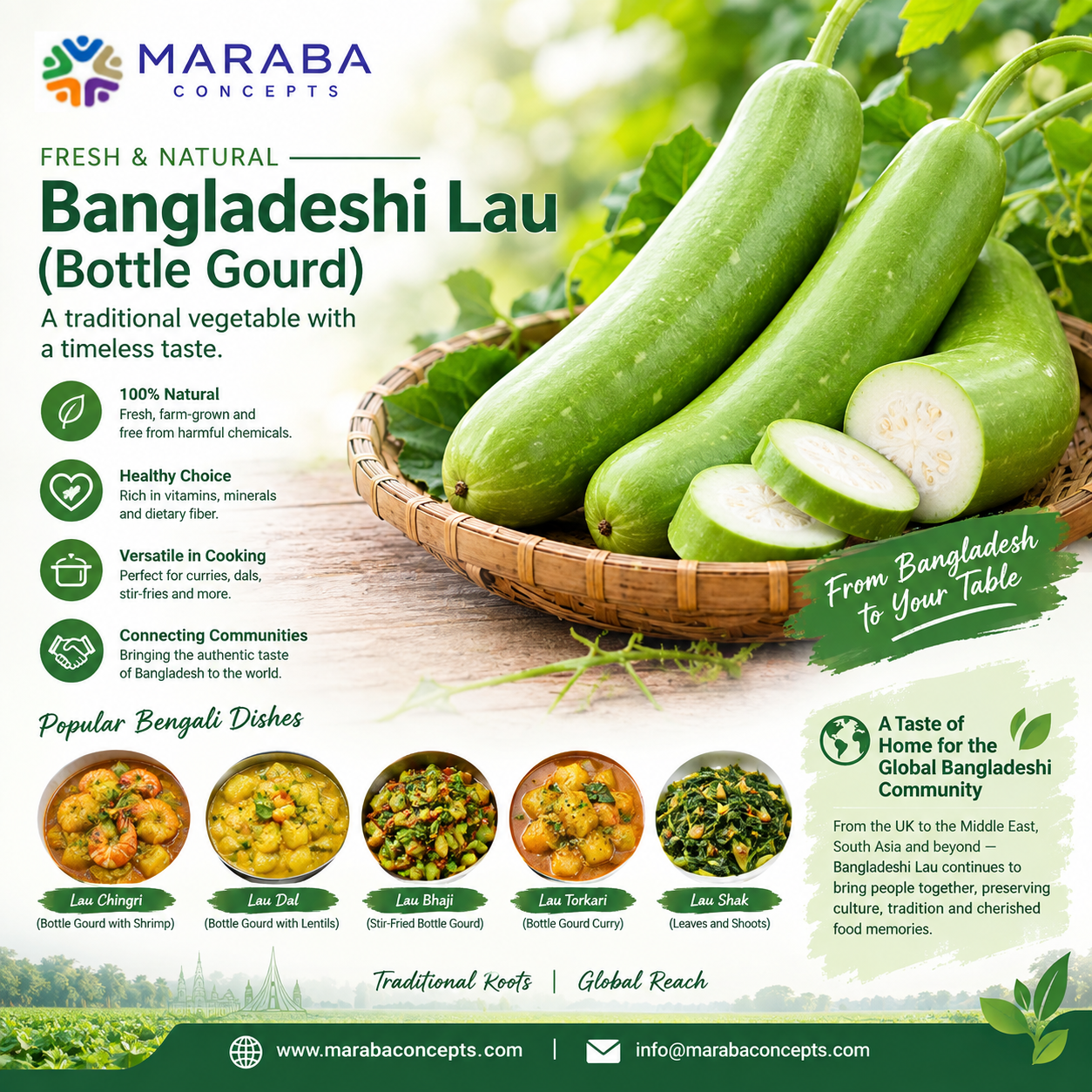
What Is Lau?
Lau, commonly known in English as Bottle Gourd, is a traditional vegetable widely cultivated and consumed in Bangladesh. Its scientific name is Lagenaria siceraria.
In Bengali households, Lau is used in many everyday recipes. It can be cooked with lentils, shrimp, leafy greens, spices and other vegetables, making it a versatile ingredient in Bengali cuisine.
Why Do Bangladeshis Love Lau So Much?
The popularity of Lau comes from a combination of taste, cooking versatility and cultural familiarity. Some of the best-known preparations include:
- Lau Chingri – bottle gourd cooked with shrimp.
- Lau Dal – bottle gourd prepared with lentils.
- Lau Bhaji – a simple vegetable preparation.
- Lau Torkari – a traditional Bengali curry-style dish.
- Lau Shak – the tender leaves and shoots of the plant prepared as a vegetable dish.
These dishes are familiar to millions of Bangladeshis and Bengali families. As a result, Lau can carry a strong emotional connection with home cooking.
Why Is Bangladeshi Lau Popular Abroad?
When Bangladeshis move abroad, their food preferences often travel with them. Rice, fish, spices and traditional vegetables remain important parts of home cooking.
This creates a continuing market for vegetables such as Lau in countries where Bangladeshi and wider South Asian communities have established themselves.
For expatriate Bangladeshis, finding fresh Lau can mean more than finding an ingredient. It can help recreate the flavours of family meals and traditional Bengali recipes.
Bangladeshi Lau in the UK Market
The United Kingdom has established Bangladeshi and wider South Asian communities, creating demand for familiar fresh produce through ethnic grocery stores, wholesalers, restaurants and specialist food businesses.
Cities such as London, Birmingham, Manchester and Bradford have significant South Asian food markets. Lau can therefore form part of a broader fresh-vegetable category supplied to these communities.
For importers and retailers, consistent quality, freshness, packaging, shelf life and reliable supply are important considerations when sourcing fresh vegetables internationally.
Bangladeshi Lau in Saudi Arabia and the Middle East
Saudi Arabia and other Gulf markets are home to large South Asian expatriate populations. This creates opportunities for ethnic food retailers and fresh produce distributors to serve customers looking for vegetables familiar from Bangladesh and South Asia.
Potential markets include Saudi Arabia, UAE, Qatar, Kuwait, Oman and Bahrain. Major commercial centres such as Riyadh, Jeddah and Dammam can connect importers and distributors with large consumer markets.
Beyond Bangladeshis, Lau may also appeal to other South Asian consumers familiar with bottle gourd as part of their traditional cuisine.
Malaysia and Singapore: Another Opportunity
Malaysia and Singapore have established South Asian communities and active ethnic food markets. Fresh South Asian vegetables are used by households, restaurants and specialty grocery stores.
For exporters, these markets can be considered alongside the UK and Gulf region when developing an international fresh-produce strategy.
Beyond Bangladeshis: A Wider South Asian Market
Bottle Gourd is not exclusive to Bangladeshi cuisine. It is also used across South Asian culinary traditions.
This means an exporter can potentially serve a broader customer base rather than relying only on Bangladeshi consumers. Ethnic retailers, restaurants, wholesalers and food-service businesses can all form part of the potential market.
From Bangladeshi Farms to Global Markets
Exporting fresh Lau requires more than growing the crop. An effective supply chain must preserve product quality from farm to final buyer.
Depending on the destination, exporters and importers may need to address phytosanitary requirements, packaging standards, food-safety requirements, customs documentation and suitable transportation conditions.
Global Export Opportunity for Bangladeshi Lau
Bangladesh has a diverse agricultural base and a large domestic food culture built around fresh vegetables. Connecting suitable producers with international buyers can create opportunities for fresh-produce exporters.
For Lau, the strongest commercial proposition is not simply the vegetable itself. It is the combination of consistent quality, reliable sourcing, appropriate packaging, export compliance and dependable delivery.
Frequently Asked Questions
What is Lau called in English?
Lau is commonly called Bottle Gourd in English. Its scientific name is Lagenaria siceraria.
Why is Bangladeshi Lau popular among Bangladeshis abroad?
Lau is strongly connected with Bengali home cooking and is used in dishes such as Lau Chingri, Lau Dal, Lau Bhaji, Lau Torkari and Lau Shak.
Where is Bangladeshi Lau in demand outside Bangladesh?
Demand can be found in diaspora and South Asian food markets in countries including the UK, Saudi Arabia, UAE, Qatar, Kuwait, Oman, Bahrain, Malaysia and Singapore.
Can fresh Lau be exported from Bangladesh?
Yes. Fresh Lau can be prepared for export through appropriate sourcing, sorting, grading, packaging, documentation, phytosanitary compliance and suitable logistics arrangements.
Who can buy Bangladeshi Lau internationally?
Potential buyers include ethnic grocery stores, fresh produce importers, wholesalers, distributors, restaurants and food-service businesses serving South Asian communities.
Related Topics
- Bangladesh Fresh Vegetable Export: Connecting Local Farms to Global Markets
- Bangladeshi Vegetables in Saudi Arabia: A Growing Ethnic Food Market
- Bangladeshi Vegetables in the UK: What the Diaspora Market Wants
- Bangladeshi Potol (Pointed Gourd): Why It Is Popular Worldwide
- Bangladeshi Korola (Bitter Gourd): From Local Vegetable to Global Market
- Bangladeshi Fruits and Vegetables: Export Opportunities in the Global Market
- How to Import Fresh Vegetables from Bangladesh
- Bangladeshi Fresh Produce for Restaurants and Ethnic Grocery Stores
Bangladesh to the World
Freshness with Trust. Taste from Home.
Maraba Concepts connects Bangladesh-origin fresh produce with international market opportunities.
Email: info@marabaconcepts.com